Why backlinks still matter? Even when some people say they don’t?
You always publish great articles that vanished into the internet with zero traction!
I’ve been there too. I put in the work, hit “publish,” and nothing happens. That’s when I learned: it’s not just what I create that counts, but also it’s who vouches for it.
Backlinks are those vouches. They’re digital recommendations. Like a trusted friend saying, “This person knows what they’re talking about.”
For over a decade, backlinks have defined online credibility. And in 2025, that’s still true. What’s changed is how we earn them.
Spammy directories and automated exchanges no longer work. Google’s algorithms now reward context, trust, and human connection. The real winners are those who build relationships and authority, not shortcuts.
This shift is happening across the SEO world. Thousands of marketers are realizing they don’t need to buy links or beg for mentions. They just need better systems for collaboration and discovery.
So this isn’t just about getting backlinks. It’s about earning them with integrity, creativity, and connection.

What Are Backlinks and Why They Still Matter in 2025?
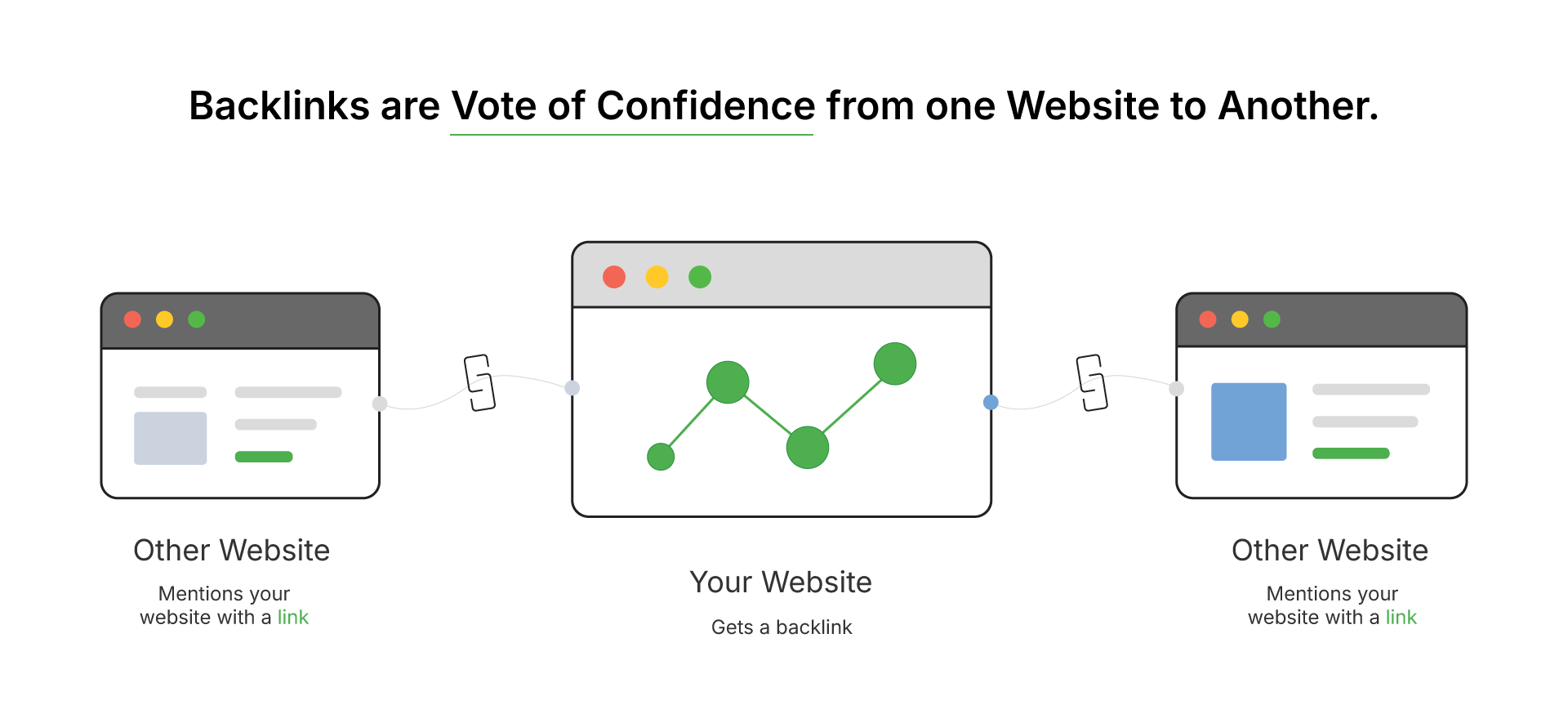
When people ask me what backlinks really are, I always start with this: backlinks are digital trust signals.
Each one is a vote from another website saying, “I believe this content adds value.” Google interprets these votes as credibility. The more relevant, high-quality votes you earn, the stronger your authority becomes.
But it isn’t 2015. Backlinks aren’t about chasing numbers anymore.
Google’s E-E-A-T principles (Experience, Expertise, Authoritativeness, and Trustworthiness) and SpamBrain updates have changed how it evaluates links. It’s no longer how many sites link to you. It’s who they are and why they linked in the first place.
A backlink from a topically related blog carries more weight than ten from random directories.
Search engines now analyze context: what’s around the link, whether it makes sense for the user, and how it aligns with your content’s purpose.
Think of backlinks as relationships.
When respected people in your field recommend you, others listen. It’s the same online. Relevant, natural endorsements matter far more than superficial ones.
What’s fascinating now is that AI search engines (like Google’s SGE or Perplexity) are beginning to treat backlinks as semantic clues — connecting you not just to pages, but to entities. That means even brand mentions without links can strengthen your visibility if they appear in the right context.
So, backlinks are still the backbone of SEO. But their power lies in context, quality, and authenticity.
Understanding Modern Link Building Fundamentals
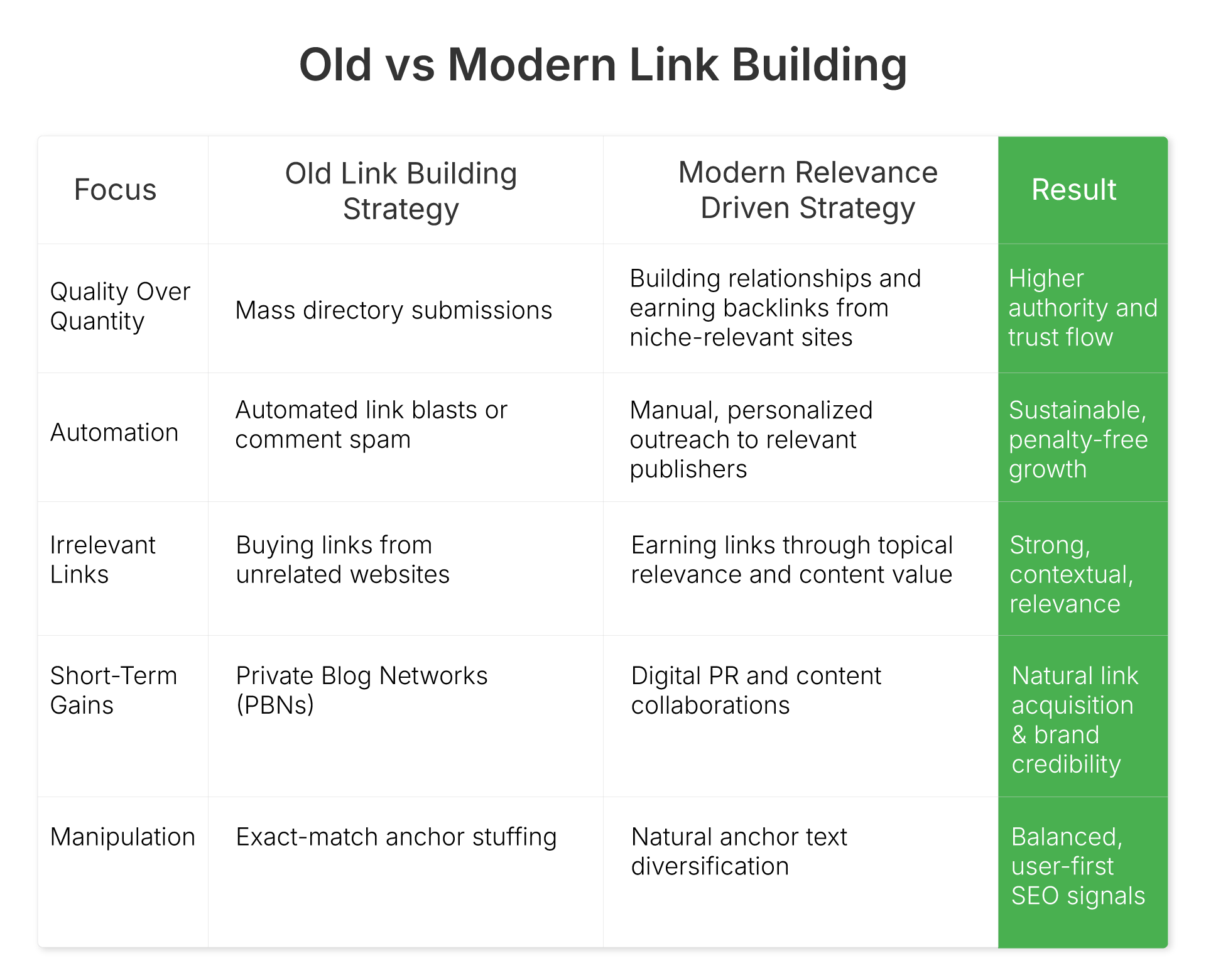
When I started in SEO, link building meant quantity. The more backlinks you collected, the better you ranked — or so we thought. But Google’s evolution changed the game completely. Algorithms like Penguin and now SpamBrain don’t just count links; they judge intent, context, and credibility.
The Three Golden Rules of Modern Link Building
- Relevance beats reach. Your links should come from websites that actually relate to your topic.
- Authority matters. A single link from a respected source can outweigh hundreds of low-quality mentions.
- Authenticity wins. Earned links outperform every shortcut — because Google can spot manipulation instantly.
Again! Link building today isn’t a numbers game; it’s a reputation system. You’re not collecting links; you’re building relationships and trust across the web.
Facts That Are Actually False
- “Guest posting is dead.” Poor guest posts are — but thoughtful, editorial collaborations still thrive.
- “Paid links always work.” They might give you a short boost, but the risk of penalties is there.
- “Anchor text doesn’t matter.” It still does, as long as it’s natural and relevant.
The Modern Mindset
If you focus on genuine partnerships, create valuable content, and give more than you take — your backlink profile will grow organically. That’s why every great link-building strategy starts with empathy, not outreach scripts.
The Tools Behind Successful Link Building
Behind every strong SEO strategy is the right mix of tools.
The kind that saves time without compromising authenticity. You don’t need an army of subscriptions; you need a clear system. I like to think of it as a link-building tech stack. Each tool plays its own part in research, outreach, and measurement.
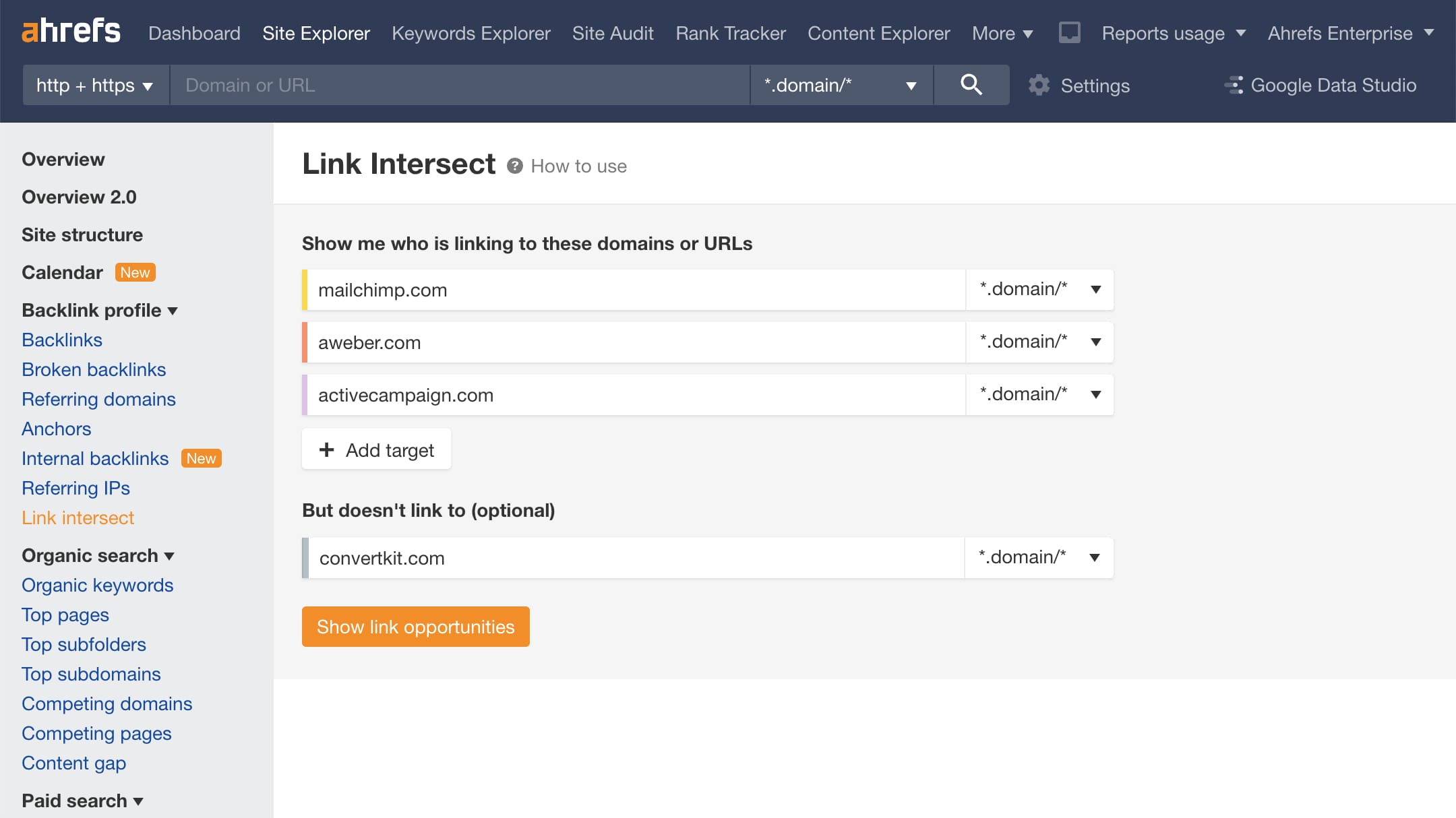
Research & Discovery
Outreach & Relationship Management
Finding prospects is easy but building relationships isn’t.
Tools like BuzzStream, Pitchbox, and Respona help manage outreach sequences, track replies, and keep conversations organized. The goal isn’t automation for spam; it’s structure for sincerity.
Content Optimization
Platforms such as SurferSEO, Frase, or Clearscope guide you in creating content that’s naturally link-worthy. When your content matches user intent, you won’t need to chase links — they’ll come to you.
Workflow Automation
Collaboration Tools
Now, there’s a new category I rely on: collaboration platforms. This is where Swap Backlink comes in.
It connects website owners and marketers within the same niche, so you can find relevant partners directly — no scraping, no cold emails, no guesswork. It’s ethical, community-driven, and built for modern SEO.
Note: Tools amplify strategy. but they can’t replace relationships. Use them to work smarter, stay organized, and collaborate with real people who share your niche.
Outreach & Link Acquisition — The Relationship Game
Most people hate link-building outreach because they’ve been doing it wrong. It’s not about blasting 200 identical emails and praying for replies. It’s about connection.
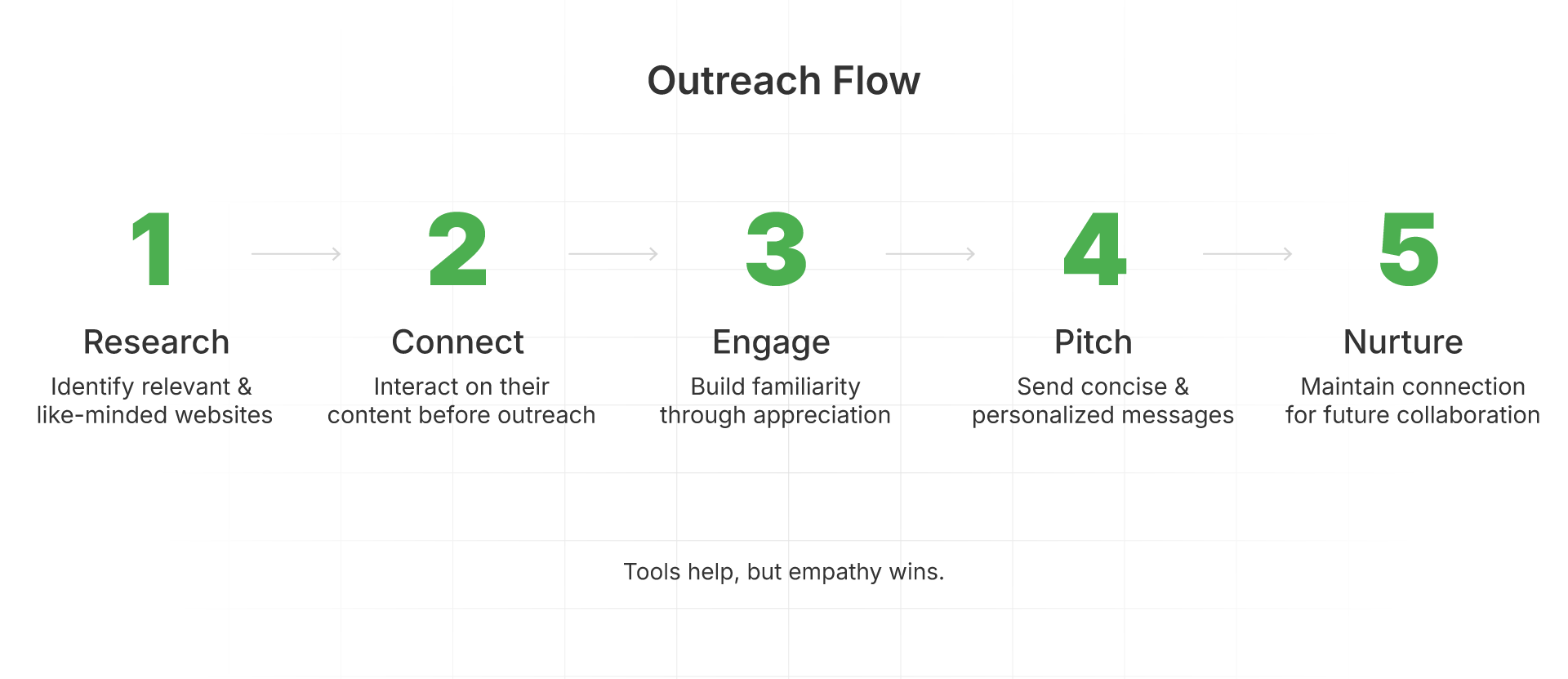
Outreach, at its core, is relationship marketing. When you send an email asking for a backlink, you’re really saying, “I admire what you’ve built. Can we collaborate?” And just like in real life, authenticity decides whether someone responds or ignores you.
From Cold Emails to Warm Introductions
Before you ever pitch, show up.
Comment on their latest post, share their content, quote their insights in your own piece. That way, when your email arrives, it doesn’t land like a stranger’s request. It feels like a continuation of an existing conversation.
Example of a Great Outreach Email
- Personal relevance: Start with something that proves you’ve read their content.
- Value offer: Make it clear how linking to your resource helps their audience.
- Short & respectful close: One line, one ask, no drama.
Here’s a simple outreach message that still works for me:
Subject: Loved your guide on [topic] — quick idea to complement it.
Hi [Name],
I recently read your article on [topic].
The section on [specific point] stood out to me.
I created a detailed guide that expands on that exact topic. It could give your readers some extra value if you ever plan to update that post.
Either way, loved the piece — sharing it on LinkedIn this week!
– [Your Name]
Tools Help, but Empathy Wins
Use platforms like BuzzStream, Respona, or even Swap Backlink to manage contacts, but never lose the human voice. AI can personalize lines, but sincerity can’t be automated.
Modern Outreach Channels
Don’t limit yourself to email. Link-building now happens through LinkedIn, Slack communities, podcasts, and co-marketing events. Each collaboration is a chance to build long-term relationships, not one-time links.
Building Free & Natural Backlinks (Without Paying a Cent)
The best backlinks I’ve ever earned didn’t cost a single dollar. They came from genuine connections, valuable content, and showing up where people already cared about the topic.
Google loves natural backlinks because they’re proof of real authority, not manipulation. These links are created when others choose to reference your work because it’s helpful.
Where Free Backlinks Actually Come From
- Communities & Forums: Share insights in relevant places — Reddit, Indie Hackers, GrowthHackers, or specialized Facebook and Slack groups. Add value first, links second.
- HARO / Connectively: Journalists and bloggers constantly seek expert input. When they quote you, that’s a powerful editorial backlink.
- Resource Pages: Many niche websites list tools or references. Offer your resource if it genuinely adds value.
- Guest Mentions: Collaborate on podcasts, webinars, or articles — not as a transaction, but as knowledge-sharing.
- Broken Link Opportunities: Find dead links in your niche and offer your content as a replacement. You help them, they help you.
The New “Free” — Collaboration
Free doesn’t mean easy. It means earned.
That’s where Swap Backlink shines. It helps you discover niche-relevant partners who also want to grow organically. No cash, no spam, no gimmicks — just real collaboration between website owners who share similar goals.
The Mindset That Attracts Links
When you help others rank better, you start to build quiet authority. People remember that and link back to you when it counts. In a way, the best backlinks are a side effect of generosity.
Creating Link Magnet Assets That Earn Links on Autopilot
If I had to choose one strategy that consistently earns backlinks without begging, it would be this — creating link magnets.
A link magnet is any piece of content so useful, interesting, or original that people want to reference it. It works around the clock — attracting backlinks long after you hit publish.
When done right, these assets build authority, generate traffic, and strengthen brand credibility without paid promotion.
What Makes a Link Magnet Work
A great link magnet checks three boxes:
- Original value: It shares something others can’t easily find elsewhere.
- Practicality: It solves a specific problem, quickly.
- Shareability: It’s presented in a format people want to link to — simple, visual, and data-driven.
Types of Link Magnet Assets
- Original Research & Data Studies – Publish insights from your own analytics, surveys, or industry trends. These become sources for journalists and bloggers.
- Interactive Tools or Calculators – Anything that helps users measure, compare, or calculate instantly earns bookmarks and links.
- Guides & Frameworks – Comprehensive how-tos that simplify a complex process.
- Infographics & Visual Reports – Perfect for visual learners and social shares.
- Free Templates or Checklists – Small, ready-to-use resources that save time.
Promotion Is Half the Battle
Even the best asset needs visibility.
Share it with your email list, on LinkedIn, and through relevant communities. Use outreach not to ask for links, but to say, “Hey, we made something that could help your readers.”
Link Building Strategies by Industry and Region
One of the biggest lessons I’ve learned is that link building isn’t one-size-fits-all. A SaaS company, a fashion retailer, and a travel blogger can’t chase links the same way and Google knows it.
Every industry has its own backlink “language.” Understanding it is what separates scattered link efforts from sustainable SEO growth.
Get access to verified website owners who are open to backlink collaboration. Swap Backlink makes link building faster, easier, and more reliable for SEO experts, marketers, and businesses who want genuine growth.
SaaS & Tech Startups – Data Builds Trust
In SaaS, data is your most valuable currency.
Create API documentation, industry benchmarks, or usage studies that others can cite. Submit your product to review platforms like G2, Capterra, and ProductHunt. Co-market with integration partners. For example, “Zapier + Notion” pages often earn hundreds of organic backlinks.
eCommerce & Retail – Product Authority and Reviews
For online stores, credibility drives conversions. Publish buyer guides, comparison charts, and expert roundups that help shoppers make informed decisions. Partner with influencers who write detailed reviews or tutorials that naturally include your product links.
Finance & FinTech – Build on Transparency
Financial brands earn links through trust. Write articles that break down complex financial concepts or analyze market trends using official data. Contribute guest columns to finance blogs, or collaborate with regulators or industry analysts.
Healthcare & MedTech – Compliance Is Authority
In healthcare, credibility is everything. Collaborate with medical professionals, contribute to patient education sites, and include compliance credentials like HIPAA or GDPR. Citations from research platforms or medical directories can lift your authority instantly.
Education & eLearning – Academic Endorsements
Education platforms thrive on partnerships. Create guides for students or teachers, and reach out to universities to list your resource pages. Hosting webinars or lectures also earns valuable .edu backlinks.
Travel & Hospitality – Experience Is the Story
Travel content wins through storytelling. Collaborate with tourism boards, travel bloggers, or photographers to co-create authentic experiences. Submit to local guides like TripAdvisor, Lonely Planet, or regional directories.
Real Estate & Local Services – Think Local First
For real estate, contractors, or service-based companies, geo-targeted backlinks are gold. Get listed in city directories, partner with local chambers of commerce, and create “Best of [City]” resource lists.
Agencies & B2B Services – Share Your Expertise
If you run an agency or B2B company, thought leadership is your link magnet. Share insights through co-branded webinars, whitepapers, and marketing case studies. Mention partners or clients who might link back to you naturally.
Going Regional – Local SEO at Scale
Even global brands need local authority. Submit your business to credible directories like Crunchbase, Clutch, or PR Newswire. Publish region-specific content, use hreflang tags, and collaborate with publishers in each target market — U.S., Europe, or Asia.
How to Audit, Clean, and Maintain a Healthy Link Profile
You can build all the backlinks in the world, but if half of them are toxic, they’ll pull you down faster than they lift you up.
A clean backlink profile isn’t optional anymore. It’s the safety net that keeps your SEO growth sustainable.
Why Link Audits Matter
Links decay. Websites die, change owners, or get flagged for spam.
Google’s algorithms evolve too, and what once helped your ranking might now hurt it. That’s why quarterly link audits are essential. They help you catch problems before penalties do.
Step 1: Gather Your Data
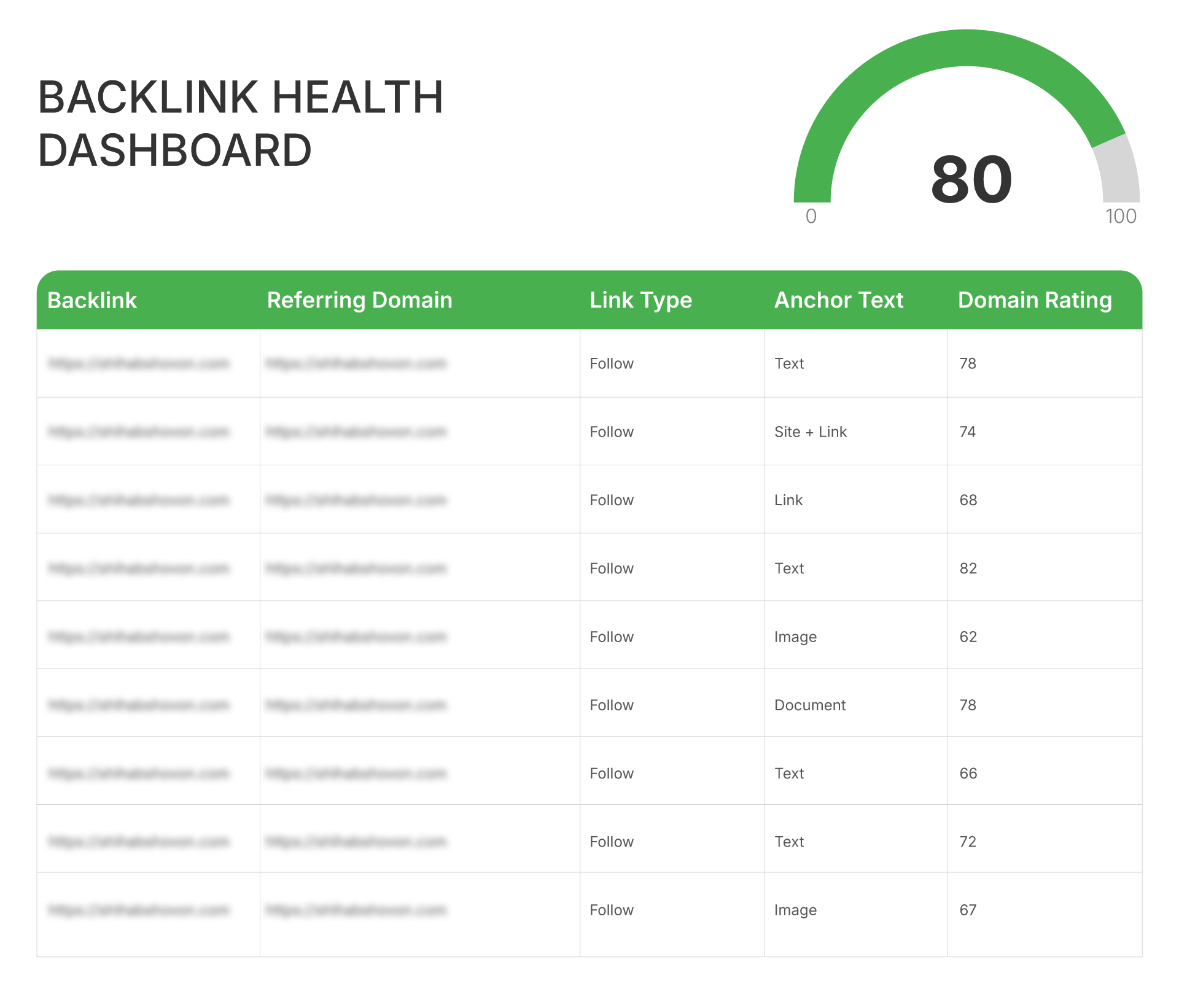
Start with the basics: export your backlinks from Google Search Console, Ahrefs, or SEMrush. Combine everything into a single spreadsheet. Add columns for metrics like Domain Rating (DR), Trust Flow (TF), and Spam Score.
Step 2: Identify the Bad Apples
Look for:
- Irrelevant or low-quality domains
- Links from foreign-language or PBN sites
- Over-optimized anchor texts
- Pages with no organic traffic
If you wouldn’t proudly show a link to your client or boss, it doesn’t belong in your profile.
Step 3: Remove or Disavow
Reach out to webmasters requesting removal. For unresponsive ones, use Google’s Disavow Tool to tell the algorithm to ignore those links. Keep notes of every action you take — audits are part detective work, part housekeeping.
Step 4: Reinforce the Good Links
Don’t just focus on the bad. Strengthen high-quality backlinks by updating those posts, re-engaging with publishers, or linking back to them. That two-way goodwill often results in more organic mentions.
Step 5: Maintain with Routine
Set alerts in Ahrefs or SEMrush to notify you of new or lost backlinks.
Integrate these reports into Looker Studio dashboards so you can visualize trends easily.
 Tip: Treat backlink maintenance like brushing your teeth — a small habit that prevents painful (and expensive) problems later.
Measuring ROI — Proving That Links Drive Growth
You can’t manage what you don’t measure and that’s especially true for link building.
Getting backlinks feels rewarding, but unless you can prove their impact on traffic, leads, or revenue, it’s just vanity.
The good news? Measuring link-building ROI is absolutely possible — if you know what to track.
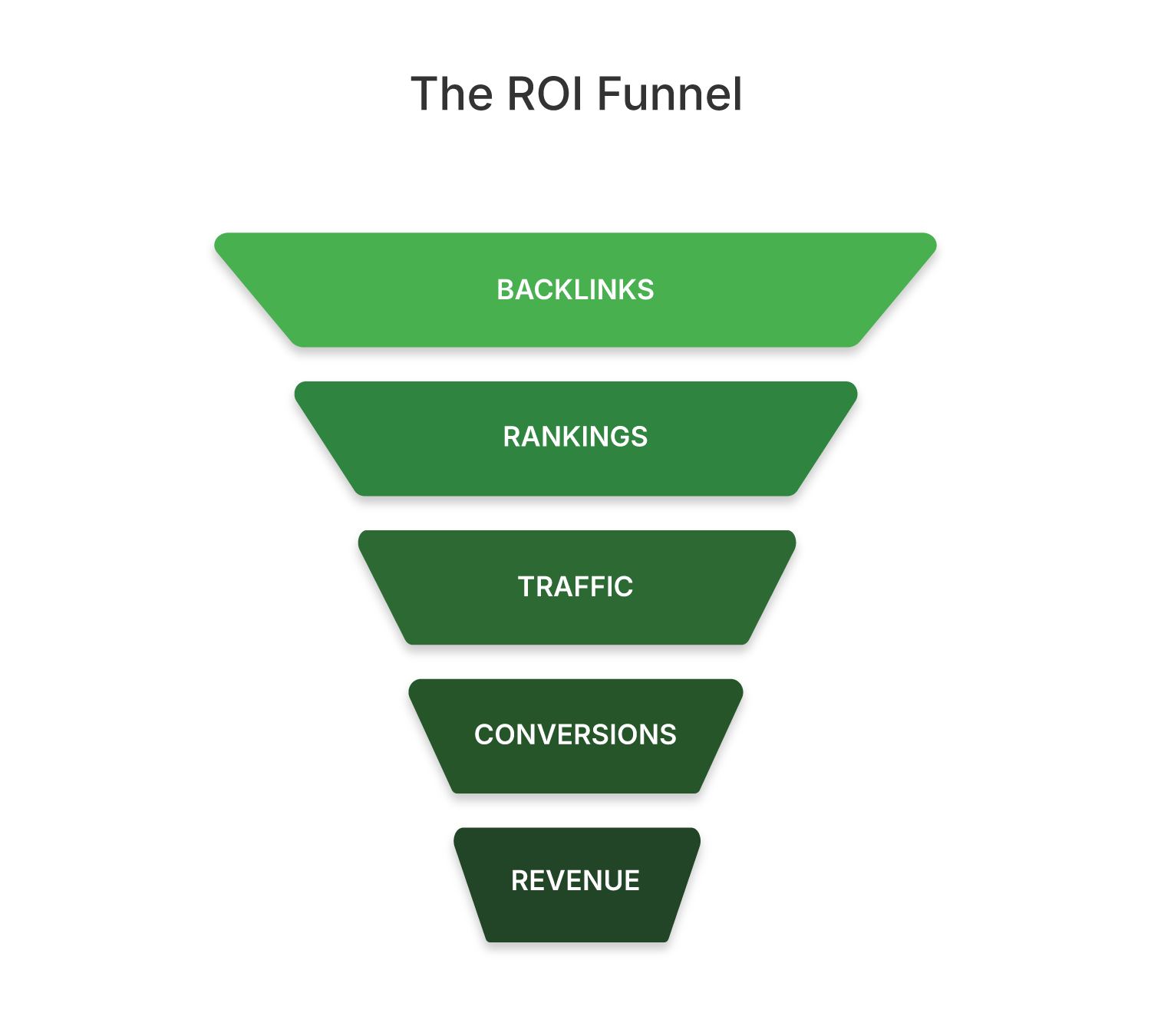
The Real Meaning of ROI in Link Building
ROI isn’t just “Did my traffic increase?” It’s understanding why it did.
A strong backlink profile doesn’t only boost rankings. It strengthens your entire SEO ecosystem: organic visibility, brand reputation, and referral traffic.
Simple ROI formula:
The Four Metrics That Matter
- Input Metrics → Hours, outreach volume, tools, and costs.
- Output Metrics → Links earned, referring domains, domain authority changes.
- Outcome Metrics → Keyword ranking improvements, organic traffic growth.
- Business Impact → Conversions, leads, and revenue attributed to SEO.
How to Track It
- Google Analytics 4 (GA4): Measure referral traffic and conversions from backlink sources.
- Search Console: Track clicks, impressions, and keyword lifts on linked pages.
- Looker Studio Dashboards: Combine data into one visual — backlinks → traffic → leads.
- Ahrefs / SEMrush: Monitor link velocity and quality score changes over time.
Measuring the Long Game
Unlike ads, backlinks compound over time. The content you optimized months ago might still generate leads today. That’s the beauty of organic growth. A single link from an authoritative blog can continue to pay dividends long after the initial effort.
Tip: Set realistic expectations. It usually takes 3–6 months to see tangible impact from new links.
Scaling Smarter with AI-Powered Workflows
Let’s be honest — link building can be exhausting.
Between research, outreach, follow-ups, and tracking, it’s easy to lose hours (or sanity). That’s where AI has completely reshaped how I work.
I don’t use AI to replace my effort. I use it to multiply it.
Artificial intelligence helps me automate the mechanical parts of link building. So, I can focus on the human parts: relationships, creativity, and strategy.
Where AI Actually Helps
Prospect Discovery:
Tools like ChatGPT, Ahrefs API, or Make (Integromat) can generate and categorize potential link prospects automatically.
💡 Use This Prompt: “Generate a list of 50 [your niche] blogs with open guest post or resource submission options.”
Email Personalization:
AI can analyze prospects’ websites and write first-line intros or subject ideas that sound natural, not robotic. It’s a time-saver, not a shortcut.
Data Enrichment:
Combine Google Sheets + OpenAI API to auto-fill missing contact info or filter opportunities by DR and traffic.
Workflow Automation:
Integrate your stack — Ahrefs, Gmail, Google Sheets, and Looker Studio — with tools like Make or Zapier to track progress and update metrics in real time.
What You Shouldn’t Automate
- Relationship-building.
- Outreach tone and empathy.
- Replies, negotiations, or partnerships.
Those still need your voice — AI can’t fake sincerity.
My Go-To Setup
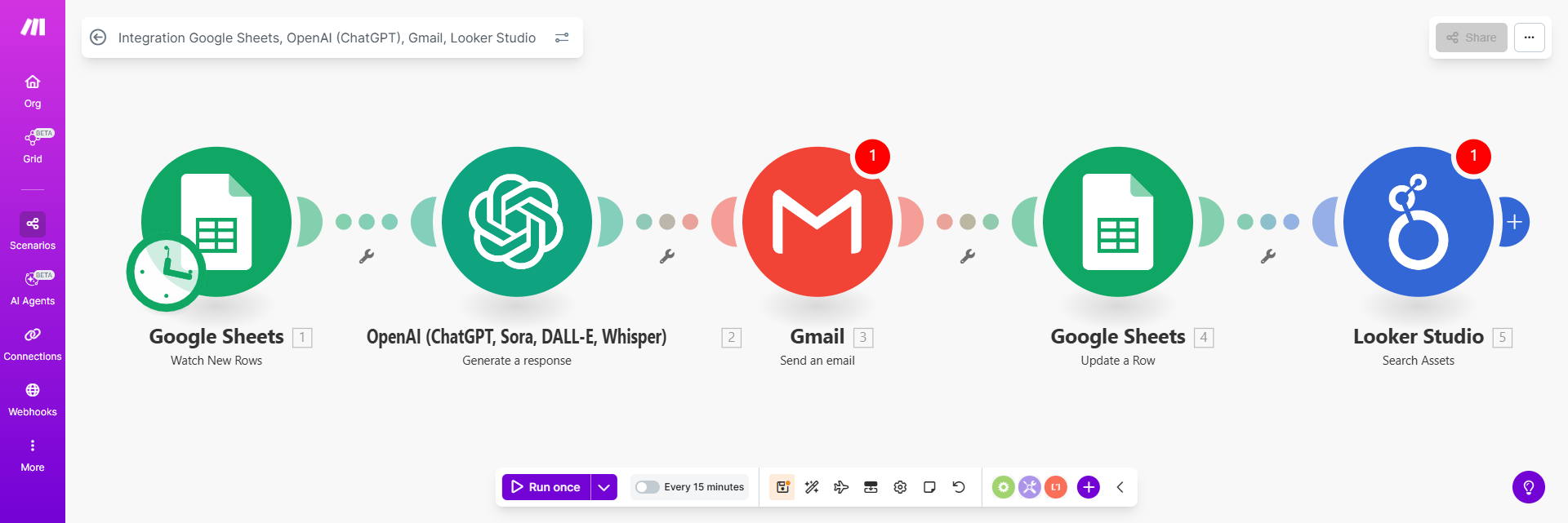
Here’s how my workflow runs:
- ChatGPT + Sheets → idea generation & sorting prospects
- Respona + Gmail → personalized outreach
- Make.com → automates updates
- Looker Studio → visualizes link-building ROI
The result? I save hours per week, get faster replies, and maintain consistent communication without sacrificing authenticity.
Tip: Always review before sending. Even the best prompt can produce the wrong tone — AI drafts, you approve.
Ethical & Automated Link Building Practices
Automation is powerful, but it’s also a double-edged sword.
One wrong workflow, one careless mass email, and your “smart SEO system” can become a spam generator overnight.
I’ve seen this happen: talented marketers lose rankings, partnerships, and reputation simply because their automation lacked oversight. That’s why, Swap Backlink follows one rule — use automation to assist, not to deceive.
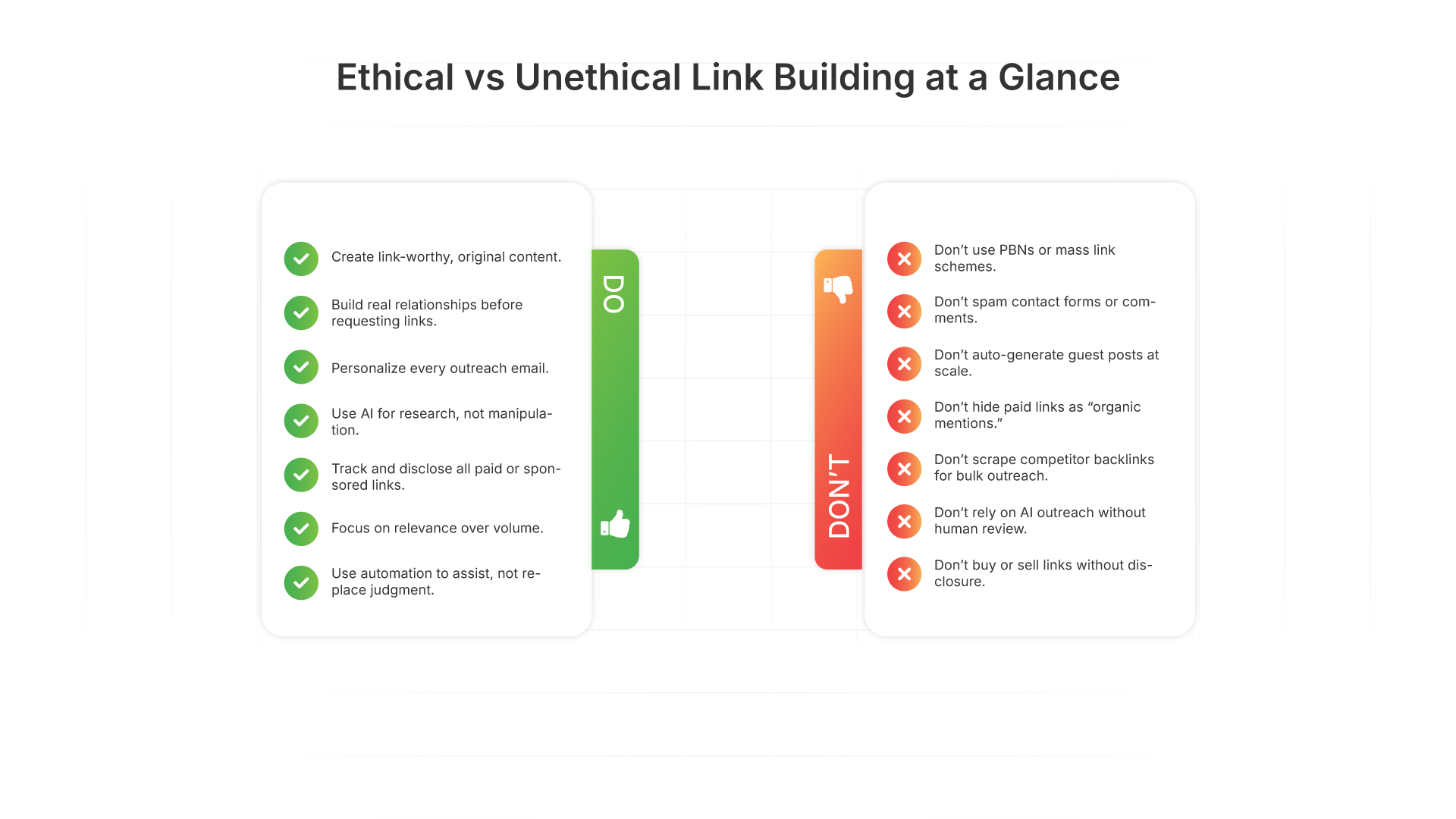
What “Ethical Link Building” Really Means
Ethical link building is about intent.
You earn backlinks because you’ve created something valuable — not because you’ve tricked or paid someone for them. It’s transparency, relevance, and honesty at scale.
Google’s recent updates to SpamBrain and its link spam policies focus on intent detection — understanding why a link exists, not just where it points. Paid placements without disclosure, link exchanges at scale, or automated submissions now trigger faster penalties than ever.
The Right Way to Automate
- Automate data collection, reporting, and email drafting — not human conversations.
- Always review AI-generated messages before sending.
- Keep rel=”nofollow” or rel=”sponsored” tags on paid or partnership links.
- Document campaigns — intent, outreach method, and disclosures — in a compliance log.
Common Black-Hat Traps to Avoid
- Private Blog Networks (PBNs): AI easily detects repetitive footprints.
- Fake Guest Posts & Link Insertions: Most are flagged within weeks.
- Comment & Forum Bots: Obsolete, noisy, and reputation-killing.
How to Stay White-Hat
The formula is simple: Value × Relevance × Transparency.
If your content helps people, your outreach respects them, and your automation stays honest — you’re future-proofed.

The Future of Link Building – From Links to Entities
The way search engines understand authority is changing faster than ever.
We’ve moved beyond backlinks as just “votes”. We’re now entering the era of entities.
In traditional SEO, links connected pages.
In AI-powered search, links connect concepts — who you are, what you stand for, and how consistently your brand shows up across the web.
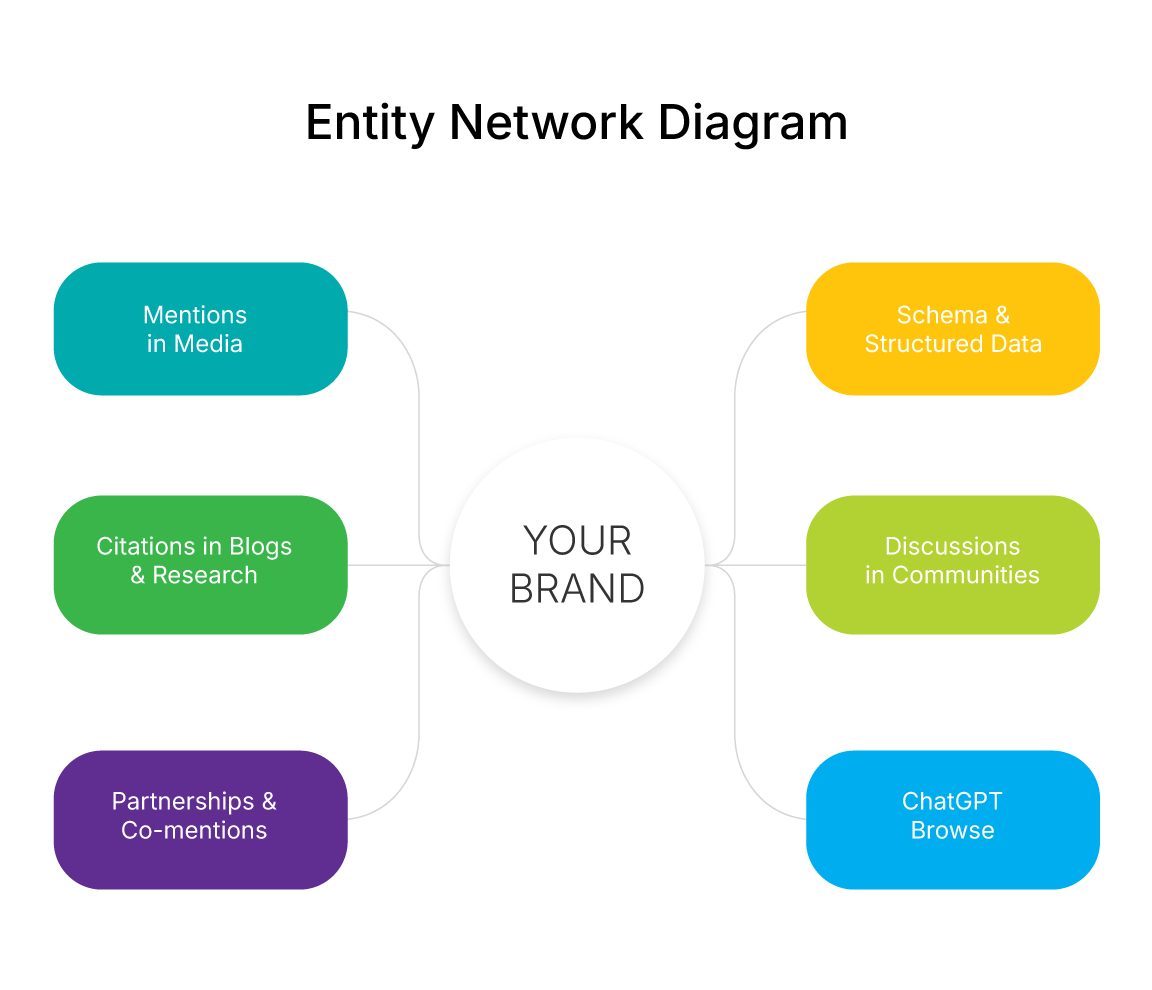
From Hyperlinks to Knowledge Connections
AI search systems like Google’s SGE, Perplexity, and ChatGPT Browse don’t just crawl links — they interpret relationships.
When multiple trusted sources mention your brand, cite your research, or reference your insights, those signals form an entity network around you.
That network tells AI models, “This brand knows its field.”
And that’s when your content starts appearing directly in conversational search answers — even without traditional backlinks.
Co-Citations and Brand Mentions
Even unlinked brand mentions now matter.
If your company name repeatedly appears near topically related terms or thought leaders, Google and AI systems infer authority. These “co-citations” act like invisible backlinks, strengthening your perceived expertise.
Example: If your SaaS tool is mentioned in articles alongside brands like HubSpot or Ahrefs, AI engines associate you with that ecosystem — improving your credibility without a single hyperlink.
Preparing for LLMO (Large Language Model Optimization)
Think of LLMO as the next SEO frontier.
Instead of optimizing for keywords, we optimize for semantic understanding — ensuring AI engines can identify and reference your brand accurately.
Here’s how I’m already preparing:
- Publishing consistent, expert-level content across trusted sources.
- Using structured data (Schema) to define entities clearly.
- Building relationships that increase co-mentions with authoritative brands.
- Encouraging natural citations in forums, communities, and social platforms.
I’ve covered a lot — from fundamentals to AI workflows.
But if I had to summarize backlink success, it comes down to three words: authenticity, consistency, and connection.
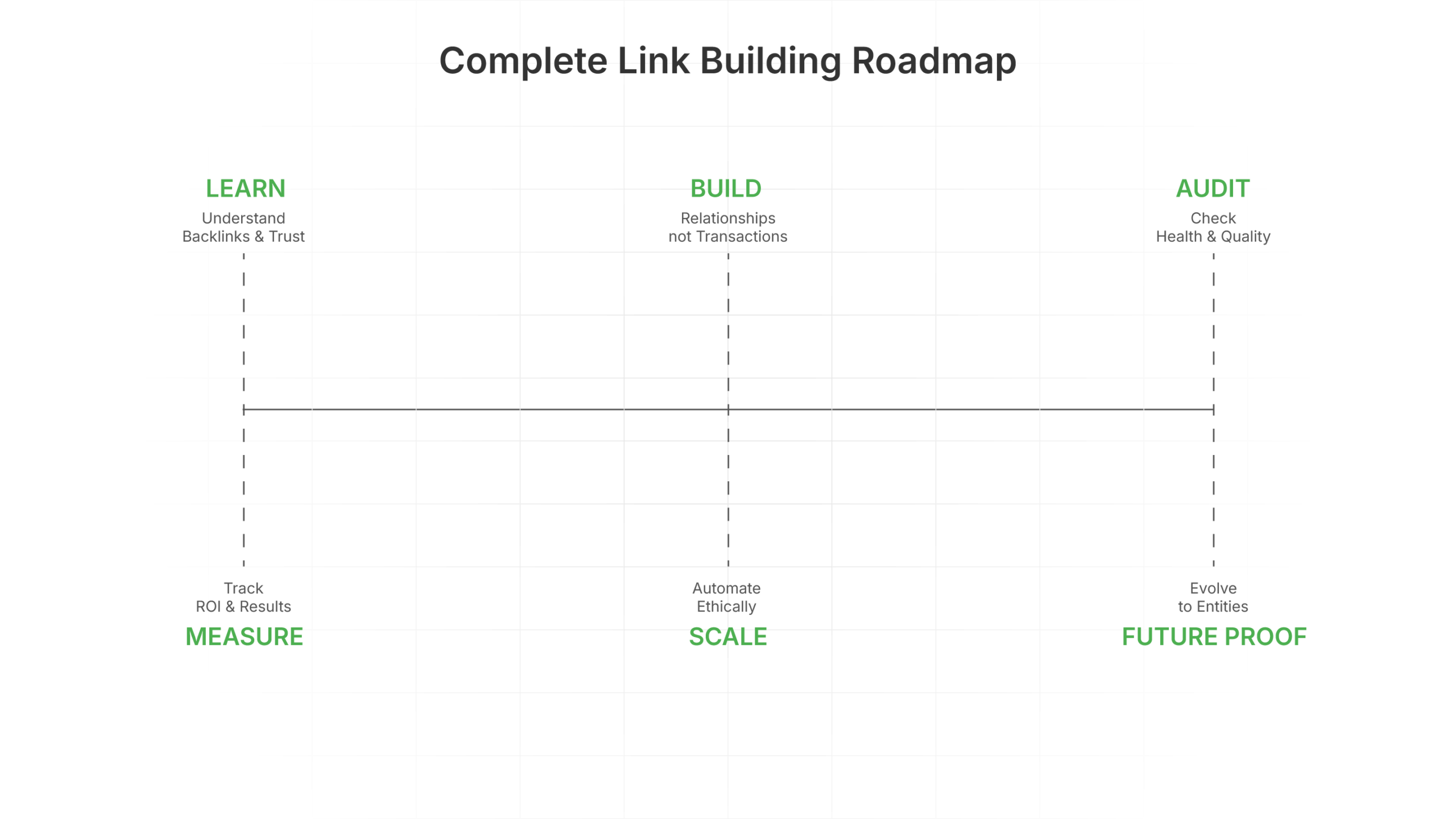
Here’s how the journey looks when you zoom out:
Your Authority Building Plan
- Understand what backlinks truly mean today — signals of trust, not shortcuts.
- Build relationships through value-first outreach and collaboration.
- Create link magnet assets that earn links naturally.
- Audit and clean your backlink profile regularly.
- Measure ROI with clear data — prove your impact.
- Scale ethically using AI for efficiency, not manipulation.
- Evolve beyond links — build an entity, not just authority.
Backlinks are no longer just blue hyperlinks, they’re connections, collaborations, and credibility in digital form.
If there’s one thing I’ve learned after years of trial and error, it’s this: the best SEO results come from genuine human relationships amplified by smart systems.
Because in the end, real growth happens when we stop gaming search engines and start earning trust.